CLEAR Act of 2025
When a flood damages the same road or water line more than once, local officials often know where the next problem will be. What a small town may lack is someone with time to compare possible fixes, identify funding, and bring the right agencies together before heavy rain returns. The Championing Local Efforts to Advance Resilience (CLEAR) Act of 2025 would help states, territories, and Tribal governments establish or maintain offices that can provide that support. Rep. Jason Crow (CO) introduced the bipartisan bill in December 2025 with Reps. Young Kim (CA), Gabe Vasquez (NM), and Carol Miller (WV).
A place for local officials to turn before and after a flood
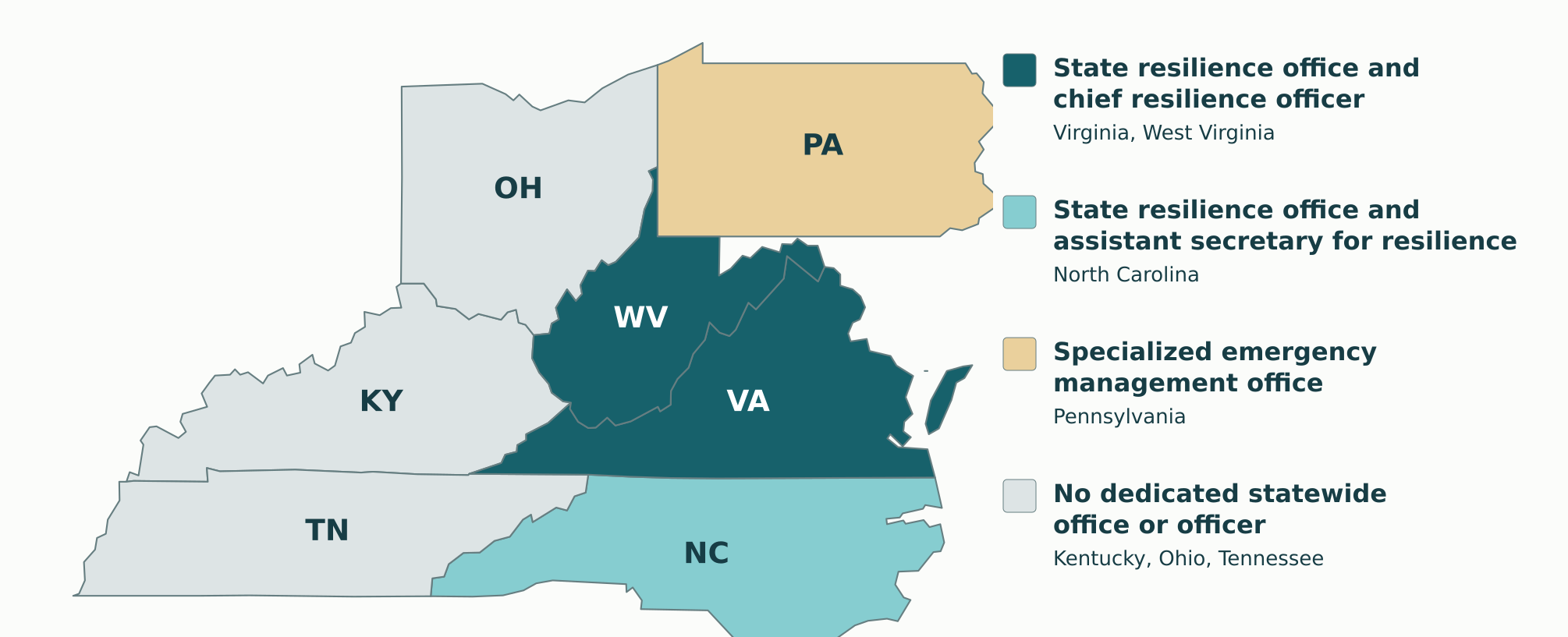
The CLEAR Act would authorize the U.S. Department of Housing and Urban Development to award grants to resilience offices. These offices would help local governments develop and carry out resilience plans, connect communities with resources before and after disasters, and coordinate work across agencies. For an Appalachian town where one person handles several public duties, that could mean having a state partner to call while there is still time to plan a project. Local governments could also receive subgrants, and grant funds could help cover the nonfederal share required by eligible federal programs.
Giving flood-prone communities a voice in state priorities
Participating offices would consult vulnerable and affected communities and update their resilience plans at least every five years. The plans would look beyond damage to public infrastructure to consider housing, jobs, health, and social services. When awarding grants to states and territories, HUD would give priority to applications that identify risks in disadvantaged communities and prioritize projects that benefit them. Each grant would cover at least two years of work, giving offices time to help communities carry plans into practice.
The Coalition supports passage of the CLEAR Act because rural communities need access to planning staff and technical assistance between disasters. In a watershed shared by several towns or counties, a state resilience office could help officials identify where roads repeatedly wash out, coordinate with transportation and water agencies, and pursue funding for improvements that serve more than one community. This is the kind of sustained state and regional support we call for in Pillar I of our platform.